Embarking on a jewelry project is always an exciting step, but selecting materials can quickly become overwhelming.
There are so many types of beads, metals, wires, stones, chains, and findings. Not all of these materials are suitable for every type of jewelry design.
To simplify your material selection process, there are some key factors you should take into consideration.
1. Define the type of jewelry you’re making
First, determine what you’re planning to make. A delicate chain necklace, a bold pair of earrings, or a wide cuff bracelet all require different materials.
Consider the style, dimensions, weight, and intended use of the jewelry piece you are planning to create. This will help you decide which materials you need.
2. Make sure materials complement each other
Since most jewelry designs consist of several components, it’s important to make sure the materials you choose are compatible.
Think about how colors, textures, shapes, and finishes complement each other. A smooth metal might look great against a raw stone, while colorful beads might pair better with simple metal findings.
Don’t overcrowd the design
Having too many types of materials in one design might result in a busy, cluttered look.
It’s better to stick to one or two main materials, and add others as accents, rather than having them compete with each other.
3. Know the different types of metals
Metals are frequently used in jewelry for chains, clasps, wires, findings, and other decorative elements.
Depending on the jewelry piece you’re making, you may use sterling silver, gold-filled materials, stainless steel, brass, or other jewelry metals.
Think about aesthetics and durability
Each type of metal has its own color, finish, durability, and maintenance needs.
Consider how the metal will work with the rest of your design, and how often the jewelry piece will be worn.
4. Pick the right beads and stones
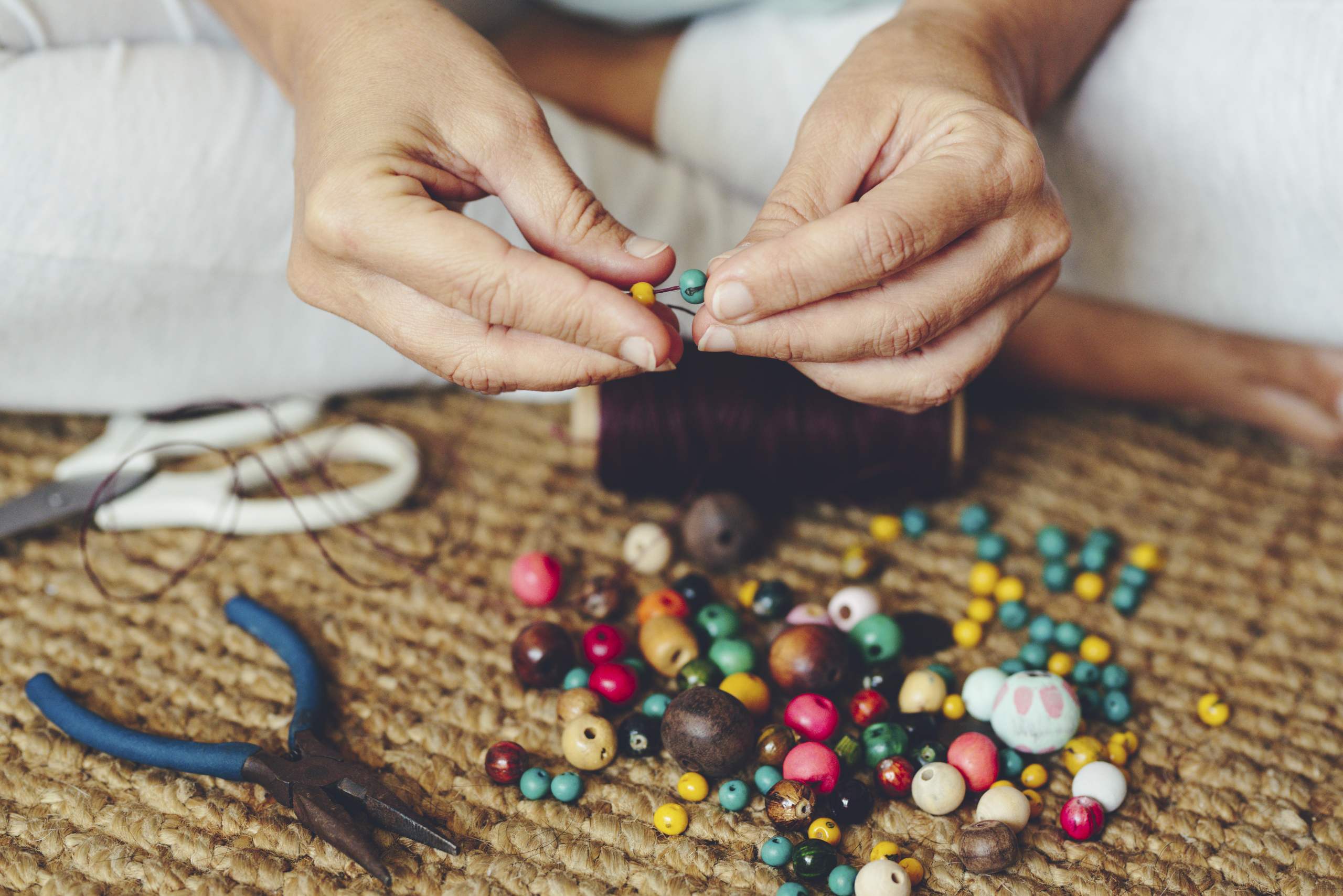
Beads and stones can be the centerpiece of your jewelry design.
When selecting beads and stones, consider more than just the color. Look at their size, shape, weight, surface texture, and how easily they can be combined in your design.
Consider the weight
Bulky or heavy beads and stones might impact the comfort level of the jewelry piece, especially in earrings and delicate necklaces.
Just because a bead or stone is pretty doesn’t mean it’s the best choice for your design.
5. Choose the right wire
Wires come in various metals, gauges, and degrees of flexibility. The type you’ll need depends on the project you’re working on.
A thin wire might work for delicate wraps and embellishments, whereas a thicker wire might be better for structural parts of your design.
Match wire to the technique
Think about whether you need to bend, wrap, form loops, or shape the wire. A wire that’s too rigid might be difficult to work with, while a wire that’s too flexible might not hold its shape.
6. Don’t overlook findings
Findings are the small pieces that hold your jewelry together. They might include clasps, jump rings, ear wires, crimp beads, connectors, and other fasteners.
Think about functionality
Even though findings might be tiny, they’re essential to the functionality and durability of your design.
Make sure the findings you choose are the right size and material for your project.
7. Consider the color and finish
The color and finish of the materials you choose can set the mood for your jewelry design.
For example, warm metals give off a different vibe than cool metals, and matte, shiny, brushed, or antiqued finishes can totally change the feel of a piece.
Start by creating a palette of materials to use in your design.
8. Test your combinations
If you’re unsure about a particular combination of materials, make a sample piece first.
Try out the colors, proportions, connections, and overall weight of the materials. You might learn that a material combination looks great on paper, but doesn’t work well in practice.
Conclusion
Making the right choice when it comes to materials for your jewelry project doesn’t have to be complicated.
Once you know what you’re making and how each type of material will contribute to the overall design, you can start narrowing down your options.
Define the type of jewelry, think about weight and function, combine materials in a way that makes sense, and test your ideas before you commit.
Remember, the point isn’t to use the fanciest materials or the biggest variety of components. It’s to select materials that work together to make a gorgeous, wearable, and well-balanced piece of jewelry.